


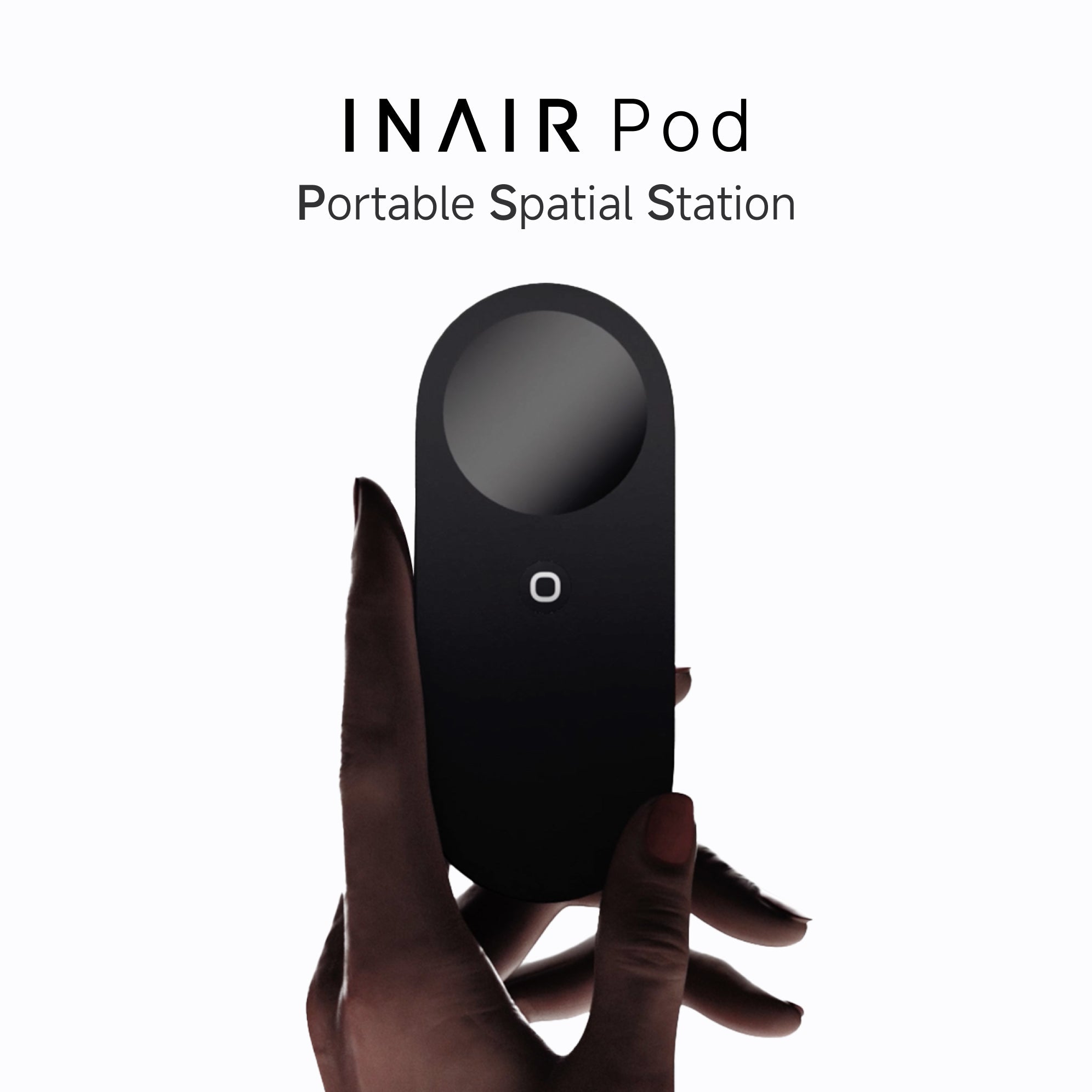
Consumer-grade AR glasses have made significant progress in display technology. The field of view (FoV) continues to expand, Micro-OLED panels deliver higher pixels per degree (PPD), and birdbath optical designs improve brightness and wearing comfort. Brands such as XREAL, Viture, and RayNeo have excelled in this area, launching lightweight frames that approach the wearing experience of everyday glasses.
However, for most users, AR glasses at this stage still primarily serve as extended displays for smartphones, suitable for occasional media consumption but struggling to deliver a true spatial computing experience. The core issue is not insufficient hardware performance, but a fundamental mismatch in system architecture. Current mainstream solutions tether glasses to smartphones running iOS or Android via wired or wireless connections—these operating systems are optimized for 2D touch interfaces, notification pushes, and app switching, excelling at brief interactions but poorly suited to supporting prolonged, continuous immersive spatial contexts.
This situation leads to a significant "experience gap":
-
Physical limitations: Integrating high-performance computing units (such as real-time AI rendering, multi-window management, or 3DoF tracking) directly into the glasses frame inevitably increases weight, heat generation, and power consumption. Thermodynamics and ergonomics set hard boundaries, making it difficult to achieve a perfect balance between all-day comfort and extreme performance.
-
Interaction paradigm conflicts: Smartphone operating systems are dominated by interruption-driven workflows (notifications, incoming calls, app silos), which contradict the continuous, uninterrupted immersion required for AR. A single phone call or battery warning can disrupt an AR session, leading to fragmented experiences and reduced reliability.
Essentially, current solutions force a device designed for persistent spatial presence onto infrastructure built for instantaneous communication, limiting the full release of AR's potential.
Decoupled Architecture: A Pragmatic Path Toward Sustainable Spatial Computing
The most reasonable solution lies in functional decoupling—separating the dedicated computing host from the display head-mounted unit. The INAIR Pod is the concrete embodiment of this concept: a compact, portable spatial computing center with an independent processor, battery, and INAIR OS, connected to glasses via USB-C.
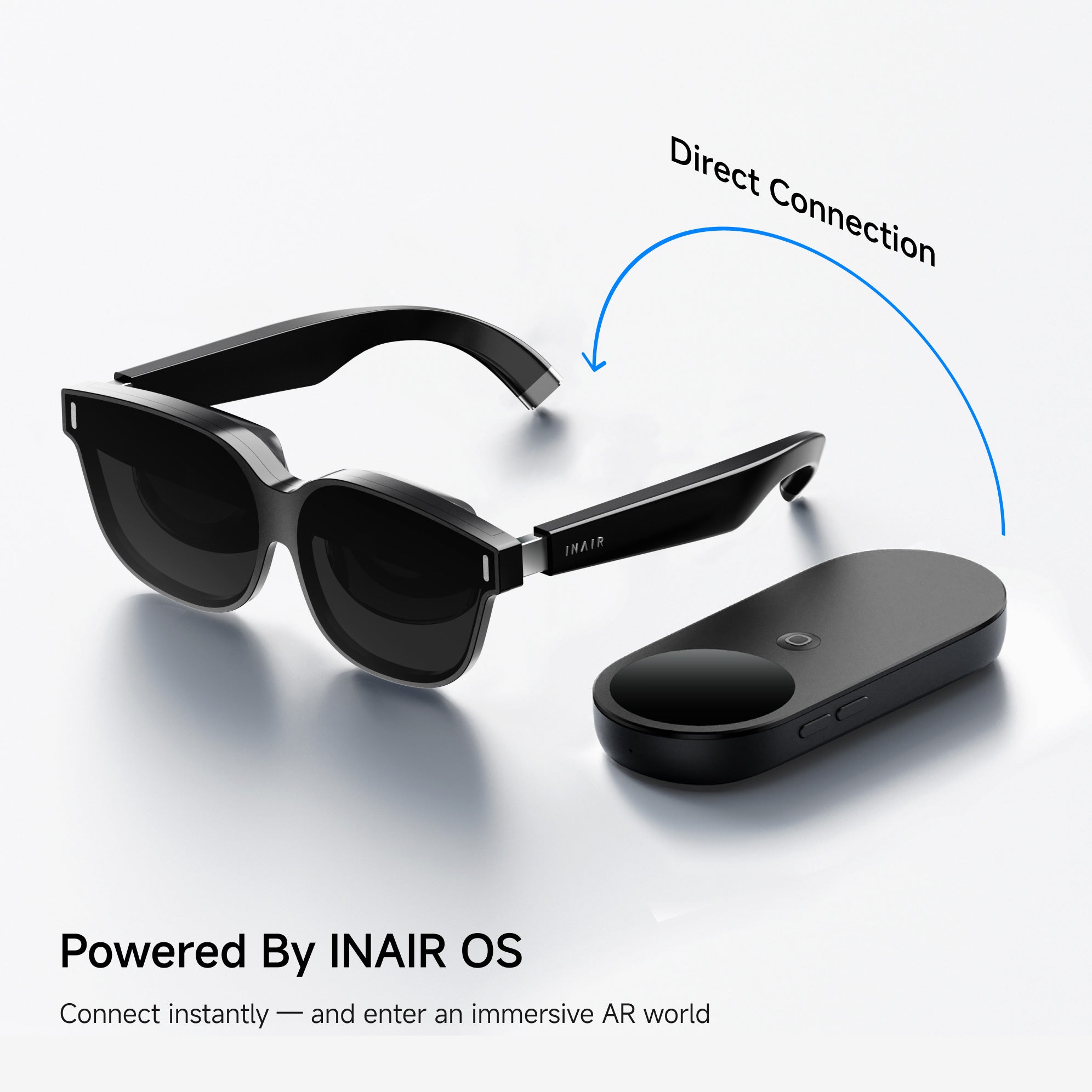
This decoupled AR architecture allows both components to leverage their respective strengths:
-
Glasses focus on optics and wearability: Lightweight frames prioritize display quality, sensors, and ergonomics without bearing computational loads.
-
Host handles intensive operations: The Pod manages sustained high-performance tasks, including multi-screen spatial desktops, native Android apps, real-time 2D-to-3D conversion, and AI integration, supported by independent power and cooling for extended runtime.
There are numerous successful historical precedents: the separation of game consoles (computing and power) from televisions (display), or laptops combined with docking stations. These examples achieve unified experiences through decoupling while preserving the core advantages of each component. For the AR field, this path is not a compromise on integration but a substantial advancement toward all-day sustainable availability.
The Strategic Value of Open Compatibility: Empowering the Entire Ecosystem, Including Other Brands
The compatibility of the INAIR Pod with mainstream AR glasses from XREAL, Viture, Rokid, RayNeo, and others is not merely a gesture of openness but a rational strategic choice based on the industry's current state.
First, it is essential to acknowledge these brands' leading achievements at the hardware level: They have pushed AR glasses toward lighter, brighter, and more comfortable designs, establishing excellent optical and wearing foundations.
By supporting these third-party glasses, the INAIR Pod upgrades them from mere "display devices" into complete systems with independent spatial computing capabilities. Users gain access to multi-screen collaboration, real-time 2D-to-3D content conversion, native app ecosystems, and extended battery life, significantly enhancing the value and usage scenarios of existing hardware.
The long-term benefits of this strategy lie in accelerating the overall ecosystem: More developers and content creators will optimize for a universal spatial computing platform rather than being confined to single-brand closed systems. Ultimately, open compatibility helps propel the entire AR industry beyond the "display extension" phase into an era of truly persistent, immersive spatial computing.
INAIR is committed to building a universal, decoupled spatial computing foundation platform, accelerating industry maturity through open compatibility, and providing users with more flexible and powerful AR experiences. For more technical details about the INAIR Pod, usage cases, and compatibility lists, please refer to the official website's product page or help center.
Q&A: Decoding the Strategy Behind INAIR's Open Ecosystem
Q: How does this "open platform" strategy benefit the broader AR ecosystem in the long run?
A: An open, universal compute platform like the INAIR Pod creates a larger, more attractive target for developers. Instead of fragmenting their efforts across multiple closed, single-brand ecosystems, developers can build applications for a common spatial computing platform that serves users across multiple hardware brands. This attracts more innovation and higher-quality content, which in turn makes the entire category more valuable for all users and hardware makers. It's a strategy focused on growing the overall market by solving a foundational bottleneck.
Q: For a user who already owns a pair of AR glasses, what is the primary value of adding an INAIR Pod?
A: The primary value is a paradigm shift from a "monitor" to a "computer." Today, your glasses are a superb external display. Adding the Pod transforms them into an independent spatial workstation. You gain:
-
A multi-screen, floating desktop (INAIR OS) that isn't mirrored from your phone.
-
Real-time 2D-to-3D conversion for movies and streaming content.
-
Long, uninterrupted sessions powered by the Pod's dedicated battery, freeing your phone.
-
A path to future updates where new spatial apps and AI features are delivered via Pod updates, independent of your glasses' hardware lifecycle.
➡️ Learn more about our products:
https://inairspace.com/collections/all
➡️ Join the INAIR community to engage in more discussions:
Discord:https://discord.gg/PnU23RVe
Share:
INAIR and VITURE Form Strategic Partnership to Advance Open Spatial Computing Ecosystem