


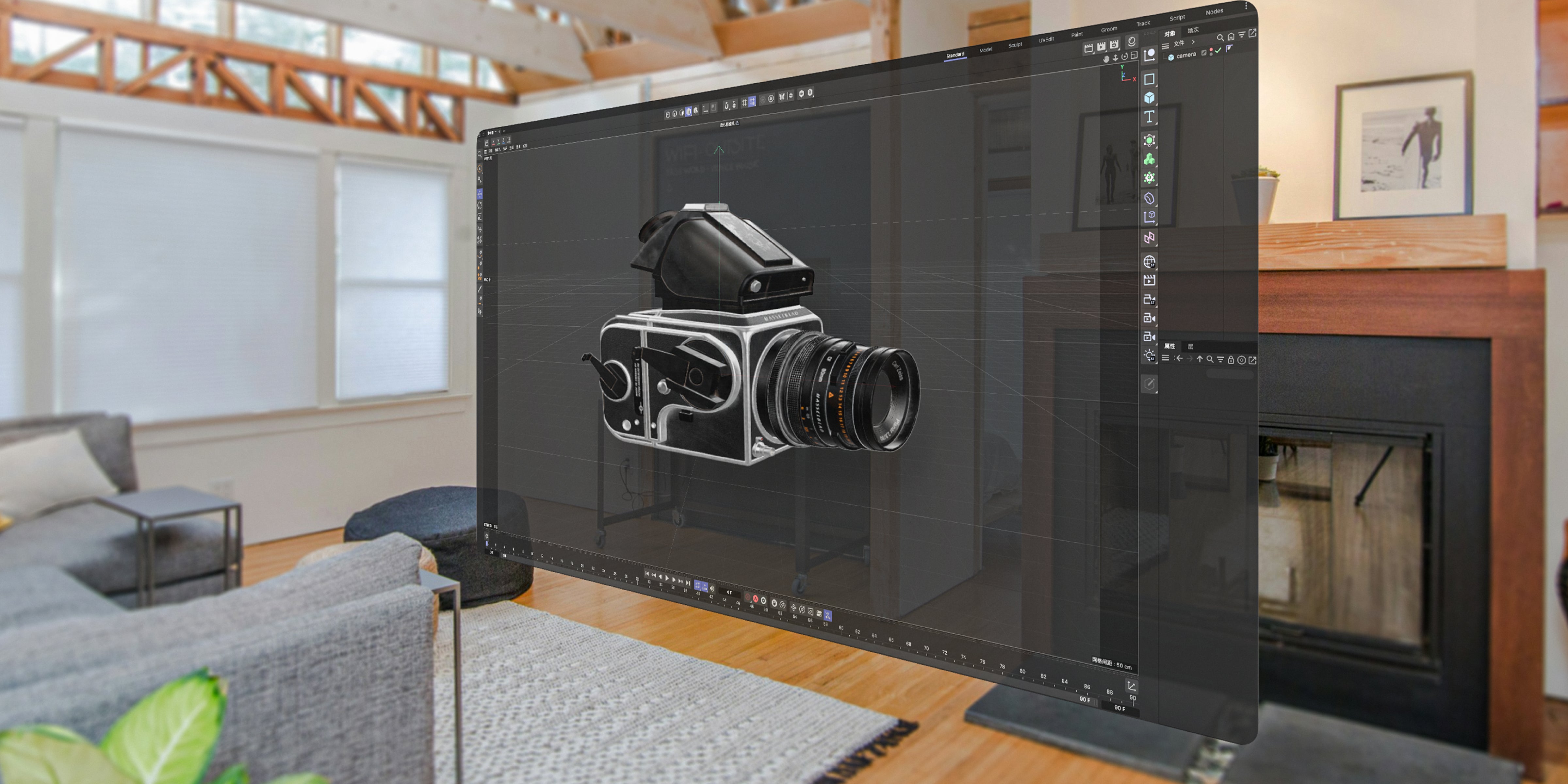
As you scroll through TikTok or watch a gaming livestream, waves suddenly crash toward you, and battlefields unfold layer by layer before your eyes. This isn't some distant futuristic technology—put on the INAIR glasses, and you can experience it firsthand.
Through INAIR Pod, miracles unfold silently—
No special effects or dedicated 3D media required. Whether on TikTok, YouTube, or everyday web browsing, every app is revitalized, instantly revealing a new spatial dimension.
A Dimensional Breakthrough: Turning Flat Content into a 3D Experience
Traditional 3D content has always had a steep barrier. To enjoy stereoscopic effects, you needed specially created 3D movies, games, or images—things that make up only a tiny fraction of all the digital content out there.
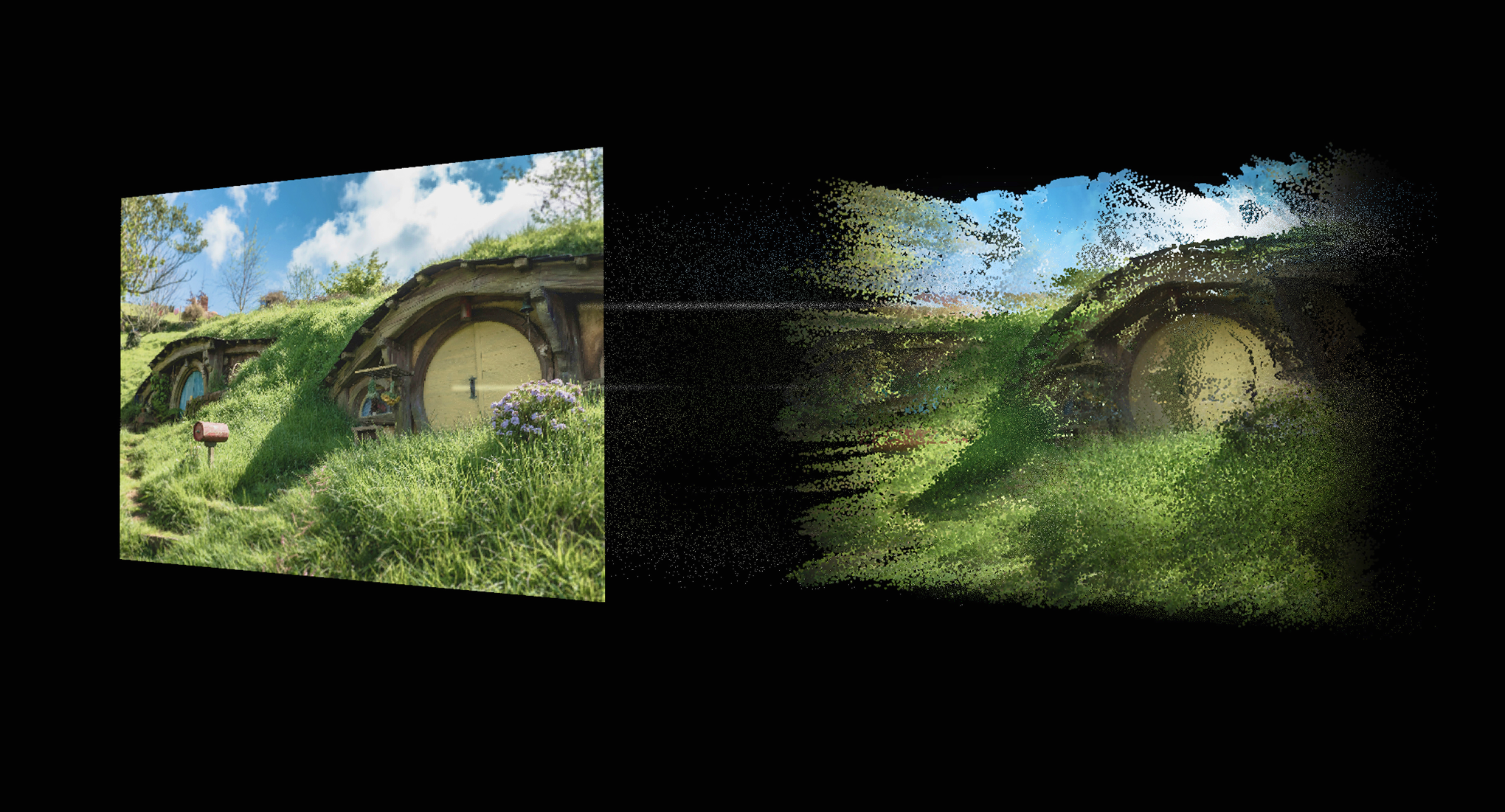
For the most part, we live in a 2D world: flat screens, flat content, information compressed onto a single, depthless surface.But once I slipped on the INAIR glasses and clicked the "One-Click 3D" button, everything changed. This wasn’t just a visual trick. It was real-time dimensional conversion powered by INAIR’s advanced AI spatial rendering engine.
Each pixel was reinterpreted. Every frame received depth information, making the screen less of a 2D window and more of a portal into a volumetric, 3D world.
Everyday Magic: How My 2D World Became a Volumetric Playground
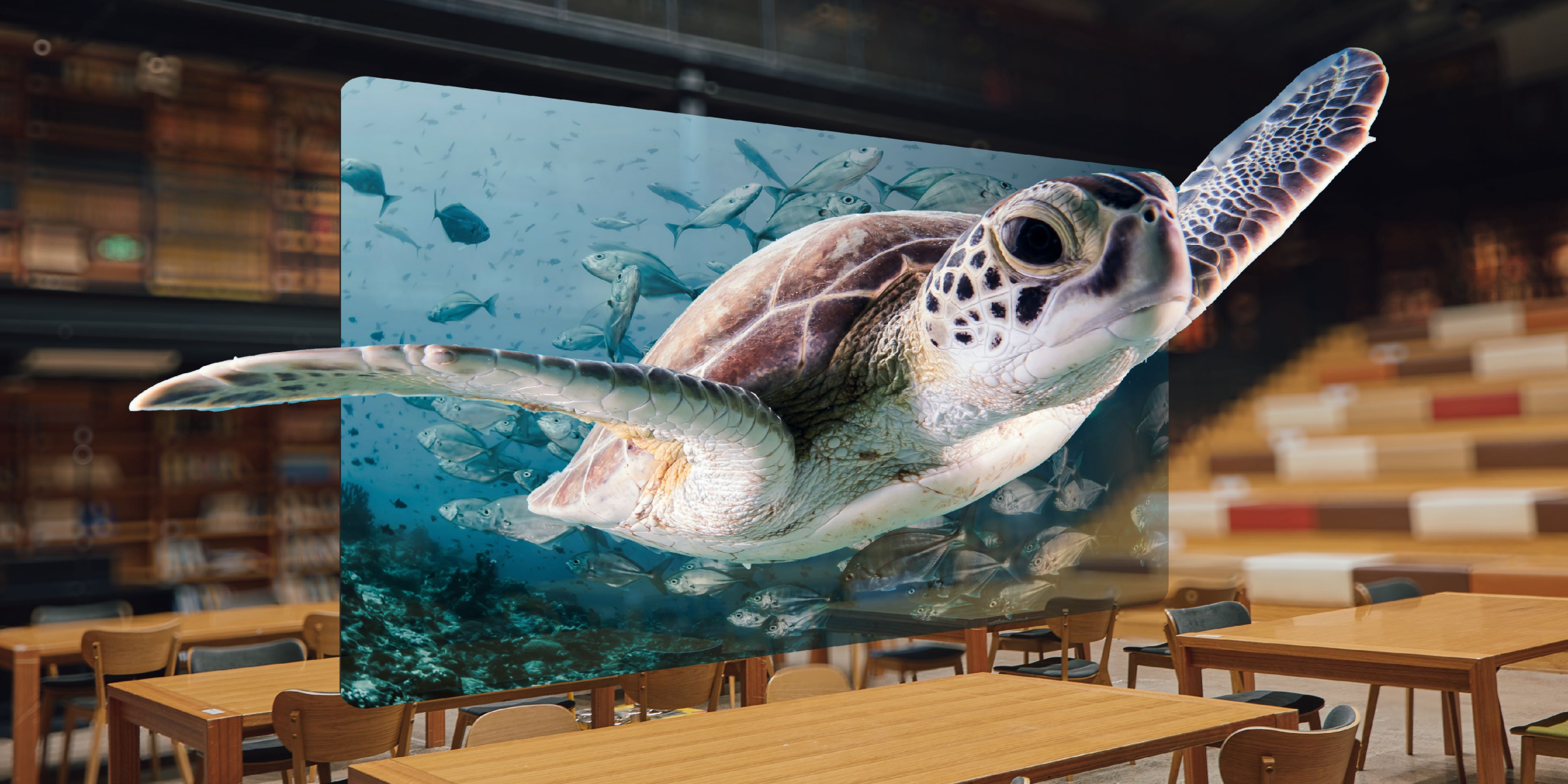
The most mind-blowing part? It’s universal and immediate. No special file formats, no long waiting times for rendering—everything happens in real-time. This means that my entire phone interface and all app scan suddenly become 3D content sources.
-
The TikTok Revolution: Swipe up to the next video, and boom, it’s in 3D. In dance videos, the performers appear as though they’re standing right in front of you, separated from the background. Travel clips? Those mountains and lakes now have real depth, no longer flat textures.
-
Netflix’s New Dimension: Animation scenes take on new life, with characters standing apart from backgrounds. Action sequences are wild, with flying effects that look like they’re spilling right out of the screen. And with INAIR’s "giant screen" effect, it feels like watching a private IMAX theater—only it's on my phone.
-
The Future of Web Browsing: Even text-heavy webpages feel completely different. Once volumized, headings, paragraphs, and images seem to layer naturally, making the structure clearer and reducing the fatigue from long-form reading.
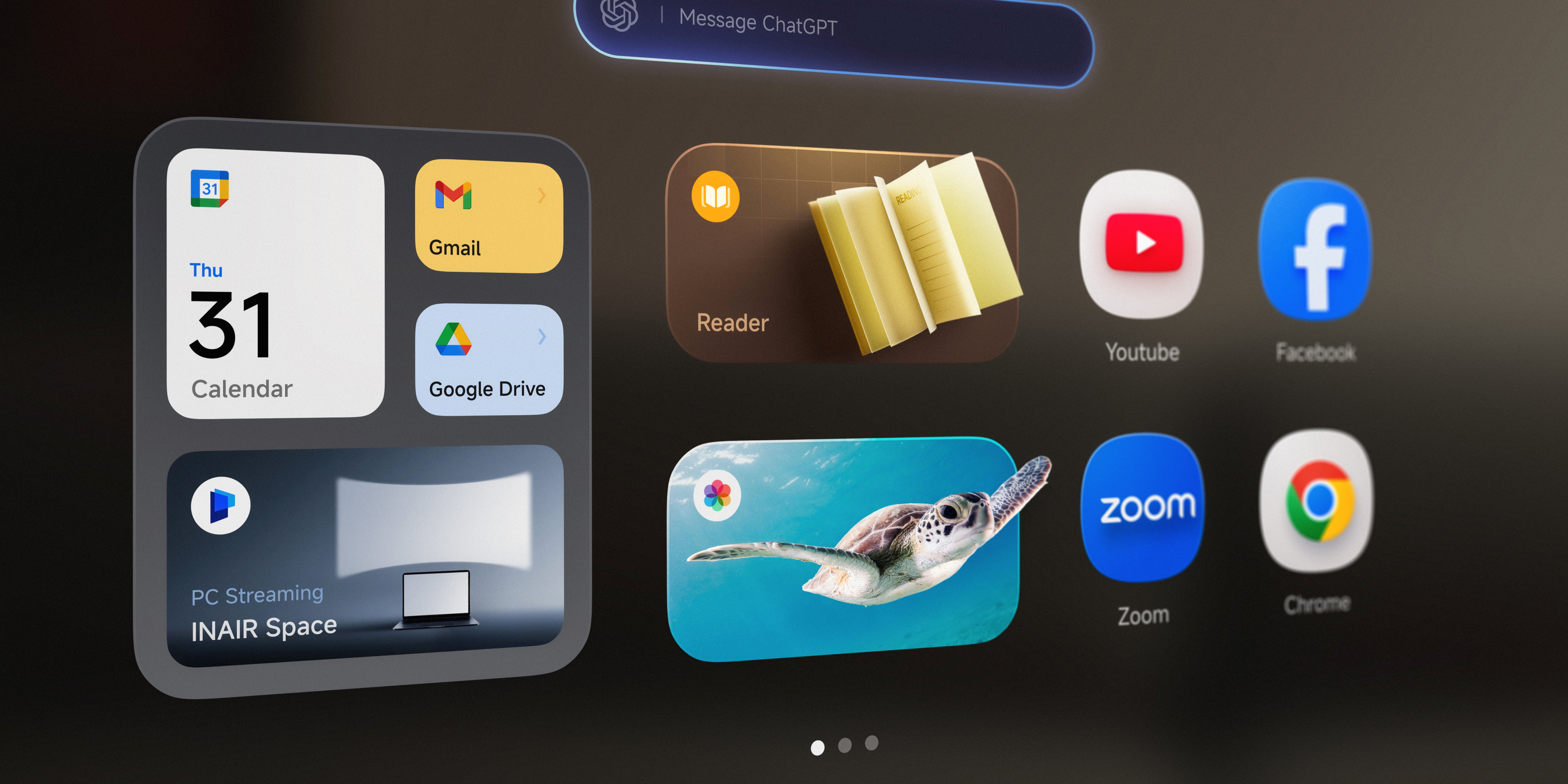
- Spatial Desktop: App icons seem to float above the wallpaper. Folders pop out when you open them. Swiping between home screens feels intuitive, with subtle parallax effects guiding you through the interface.
How Does It Work? Tech Behind the Magic: Real-Time 2D-to-3D
What makes this "magic" happen? It’s all powered by INAIR’s proprietary AI Spatial Rendering Engine. Unlike traditional 3D methods, which rely on depth simulation or anaglyph glasses (think red-blue filters), this system intelligently analyzes the content on-screen, recognizing the relationships between objects, people, and backgrounds.
Using deep learning models, it infers spatial layout, converting flat2D pixels into a natural 3D perspective. The whole process happens in real-time with almost no latency, ensuring smooth video playback.
Traditional 3D vs. INAIR’s Real-Time 3D: A Game Changer
Let’s break down the difference between the traditional 3D experiences and INAIR’s real-time 3D magic:
-
Traditional 3D: Requires special content (e.g., movies, games) designed to work in stereoscopic 3D. The content is limited, and the experience is often constrained to a screen or a specific environment.
-
INAIR’s Real-Time 3D: Every piece of digital content is automatically converted into a volumetric experience. Whether it's a movie, a social media post, or even a work document, everything gains depth and layers. Technology is dynamic, continuously adapting to new content without any user input.
The comparison highlights the revolutionary impact of INAIR’s tech. Instead of limiting 3D to select content, this experience extends across your entire digital life, from passive viewing to active interaction.
This isn't just a step forward in entertainment—it's a fundamental shift in how we interact with digital information. When everything is organized in a way that mirrors the physical world, our cognitive efficiency, spatial memory, and situational awareness are improved. INAIR’s real-time 2D-to-3D technology is quietly reshaping how we connect with our digital lives.The true magic of technology isn't about creating entirely new worlds—it's about revealing layers of dimension in the worlds we already know.When every flat screen can become a portal into a spatial world, our relationship with digital information enters an entirely new chapter.
Q&A: Your Questions About Real-Time 2D-to-3D, Answered
Q1: How good is the 3D conversion quality? Does it work on everything?
A: The conversion is surprisingly intelligent and context-aware. Thanks to the AI spatial rendering engine, it doesn't just apply a uniform effect. For dynamic content like videos on TikTok, YouTube, or Netflix, it excels at creating convincing depth by separating foreground subjects (like people or cars) from the background. The effect is most pronounced and impressive with such content. For static screens like text-heavy websites or your home screen, it adds a subtle but perceptible sense of layering, making interfaces feel more organized. While it works on "everything" displayed on your connected device, the "wow" factor is undoubtedly strongest with video and graphic-rich media.
Q2: What devices and apps are compatible with this feature?
A: The magic happens in the INAIR ecosystem. You need the INAIR Pod (the computing unit) to experience the full, seamless real-time conversion. When you connect your smartphone, tablet, or computer to this system, the entire screen output—meaning every single app running on that device—is processed. There's no need for individual app support. Whether you're browsing on Chrome, scrolling through Instagram, working in a document, or playing a mobile game, the content flowing from your device to the glasses can be converted.
Q3: Is there any lag or delay during the real-time conversion?
A: This is a key technical achievement. The AI processing is highly optimized to be extremely low-latency. In practice, you won't perceive a delay between your actions (like scrolling or playing a video) and the 3D-rendered result. The experience feels fluid and instantaneous, which is crucial for maintaining immersion and not causing disorientation.
Q4: Can long-term use of this 3D mode cause eye strain or discomfort?
A: INAIR is designed with eye comfort in mind. The glasses project images at a focal distance meant to simulate looking at a screen several meters away, which is more relaxed for your eye muscles than staring at a nearby phone. The 3D effect itself creates a natural depth that your eyes converge on comfortably, similar to looking at the real world. Most users find it comfortable for extended periods. As with any screen time, taking occasional breaks is always recommended.
Q5: How is this different from the old 3D TVs or movies that required special glasses?
A: This is a fundamental difference in approach and freedom:
-
Old 3D (Passive): Required specially created 3D source content (like a 3D Blu-ray movie). You were limited to a small library of content that was explicitly filmed or rendered in 3D.
-
INAIR's 3D (Active): Uses AI to generate depth from any existing 2D content. Your content library is essentially the entire internet and everything on your devices. It turns any video call, game, or webpage into a potential 3D experience, removing the dependency on specialized media.
If you want to enjoy 3D content without needing 3D sources and enhance your viewing experience, INAIR is undoubtedly the outstanding choice.
Visit inairspace.com now to explore the details!
Sources & Data:
-
A study by Nielsen highlights how immersive experiences, such as 3D displays, engage users at a deeper level, improving memory retention and user interaction (Nielsen, 2023).
-
According to TechCrunch, AI-powered real-time transformations are expected to be the next big leap in digital user interfaces. (TechCrunch,2024).
Share:
Why You Need an INAIR AI Spatial Computer: Blurring the Lines Between Work and Play Like Never Before
INAIR Pod Connection Guide for Projectors or External Displays: Real-Time 2D-to-3D Home Theater Setup Guide